
Teacup puppy size is the first thing most families ask us about, and it is also the most misunderstood. A puppy that fits in a coffee mug at eight weeks will not stay that small, and the word “teacup” means different things to different breeders. This guide explains what the label actually means, how big each popular breed grows, and how to judge how small a particular puppy is likely to stay. If you already know which breed you love, you can jump straight to our available puppies.
What does “teacup” mean?
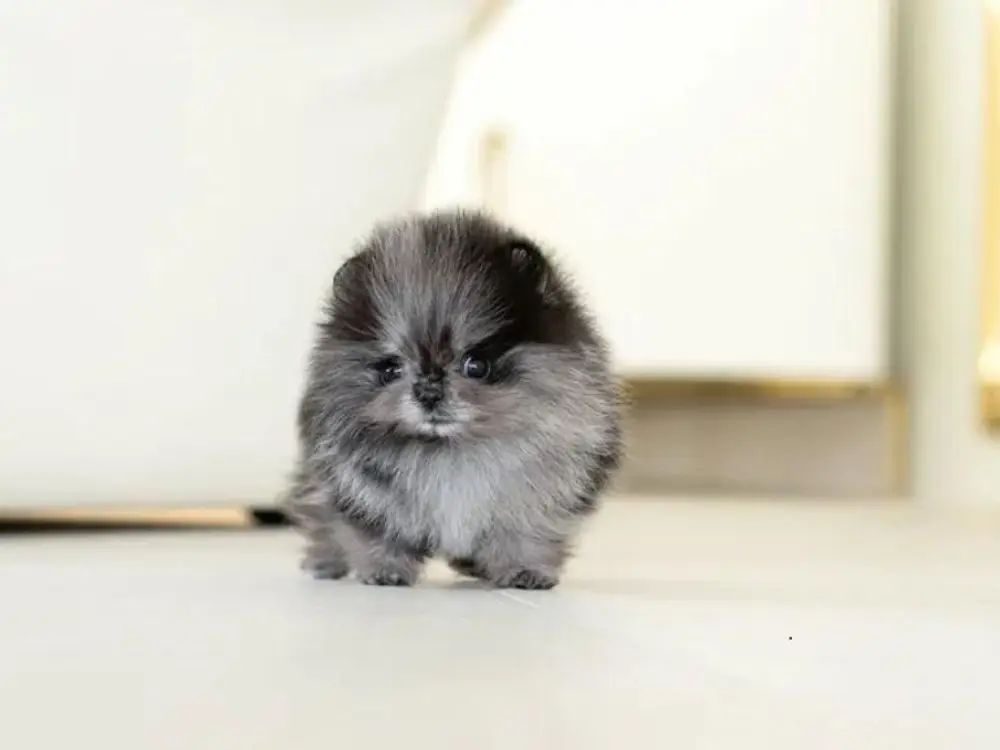
“Teacup” is not an official breed or size class. Kennel clubs such as the American Kennel Club recognise toy breeds, and each breed has a standard weight, but none of them has a separate teacup category. Breeders use the word for puppies expected to finish below the usual adult weight for their breed, most often under about 4 to 5 pounds. You will also see “micro”, “mini” and “tiny toy”. They describe the same idea: a dog at the small end of its breed’s natural range.
That matters because teacup puppy size is a prediction, not a promise. Two puppies from the same litter can finish a pound or more apart, so any figure you are given for teacup puppy size should come with a range. A responsible breeder will give you an expected adult weight range based on the parents and the puppy’s growth so far, rather than a single exact number.
Teacup puppy size by breed
The table below gives the usual adult weight for each breed we raise, followed by the range you can expect from a teacup or toy-sized puppy of that breed. Breed standard weights come from the American Kennel Club where the breed is recognised. Mixed breeds such as the Maltipoo and Morkie are not covered by a breed standard, so their ranges are typical rather than official.
| Breed | Typical adult weight | Teacup or toy-sized adult |
|---|---|---|
| Yorkshire Terrier | Up to 7 lb | About 2 to 4 lb |
| Pomeranian | 3 to 7 lb | About 3 to 4 lb |
| Chihuahua | Up to 6 lb | About 2 to 4 lb |
| Maltese | Under 7 lb | About 3 to 5 lb |
| Toy Poodle | 4 to 6 lb | About 3 to 5 lb |
| Maltipoo | 5 to 20 lb | About 4 to 7 lb |
| Morkie | 4 to 8 lb | About 3 to 5 lb |
| Shih Tzu | 9 to 16 lb | About 6 to 9 lb |
| Bichon Frise | 12 to 18 lb | About 7 to 11 lb |
| Miniature Dachshund | 11 lb and under | About 7 to 10 lb |
| Pomsky | 15 to 30 lb | About 10 to 15 lb |
| French Bulldog | Under 28 lb | About 15 to 20 lb |
Notice that some breeds never become truly tiny. A small Shih Tzu, Bichon, Pomsky or French Bulldog is still a sturdy little dog, and that can be a good thing: a slightly larger dog is usually more robust and easier to care for, especially in a home with children.
How to predict your puppy’s adult size
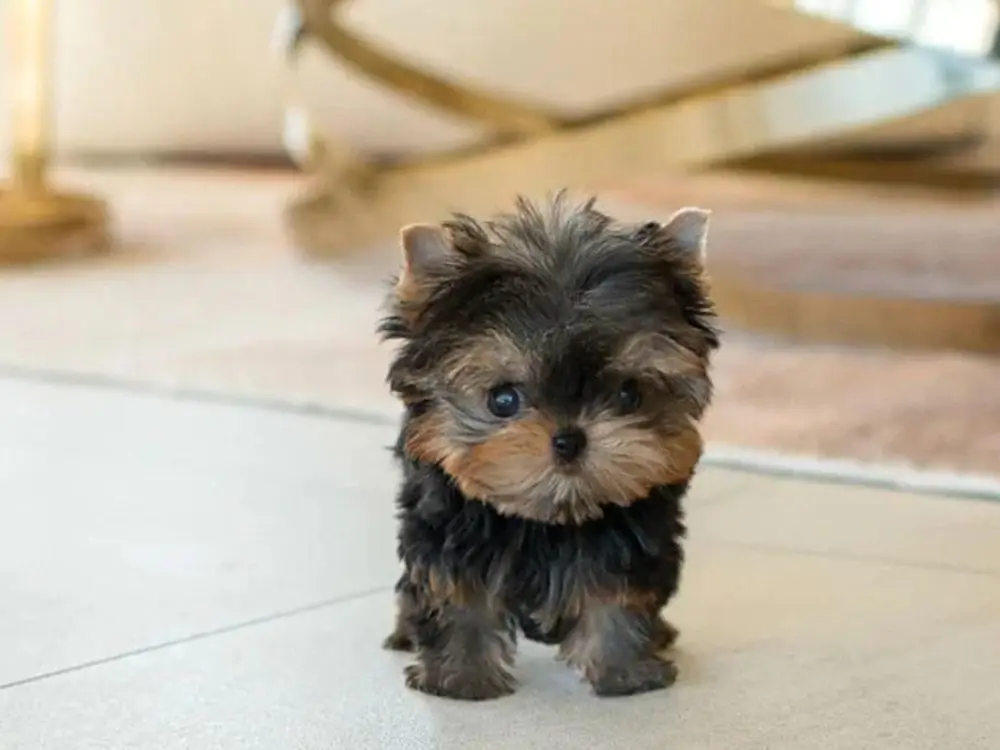
No method is exact, but these four clues together give a reliable picture of teacup puppy size:
- The parents. The single best guide is the weight of the mother and father. Ask the breeder for both. A puppy rarely ends up much smaller than its smaller parent.
- Growth so far. Toy breeds do most of their growing in the first six months. A breeder who has weighed the litter weekly can tell you whether a puppy is tracking small, average or large for its breed.
- Paw and bone size. Large paws and thick legs relative to the body often point to a puppy that will fill out more.
- Age at the finish line. Most toy and teacup dogs reach their adult height by about 9 to 12 months, then fill out slightly until around 18 months.
When you ask us about a particular puppy, we give you the parents’ weights and our best estimate of the adult range. You can read how we choose and check our breeders on the breeders overview page.
Why smaller is not always better
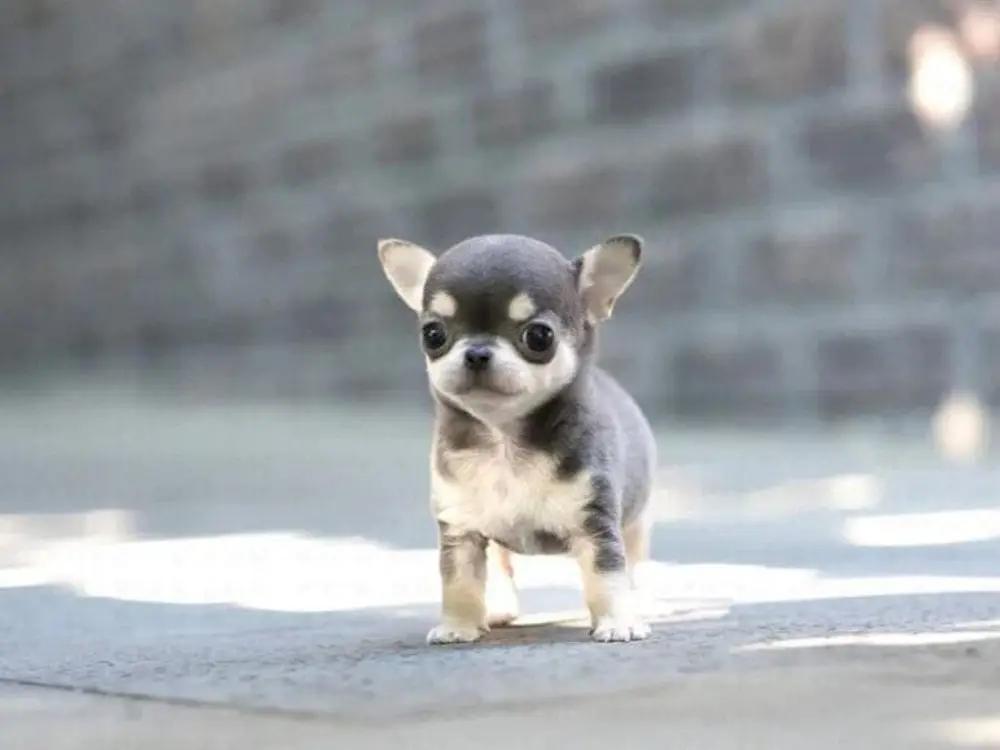
It is tempting to look for the very smallest puppy, but the tiniest dogs need the most care. Puppies under about 2 pounds are more likely to suffer from low blood sugar, can be hurt by a fall from a sofa, and lose body heat quickly. The AKC guide to hypoglycemia explains why toy puppies are especially prone to low blood sugar and what the warning signs look like.
For most families, a puppy that is expected to finish at 3 to 5 pounds is the sweet spot: small enough to carry and travel with, sturdy enough for everyday life. Every puppy we place has had the checks described on our health check page, and we will always tell you honestly if a puppy is likely to need extra care.
Teacup puppy size at 8, 12 and 16 weeks
Families often ask what a normal teacup puppy size looks like at each age. Every breed and line is different, so treat these as rough signposts rather than targets:
- 8 weeks: most teacup and toy puppies weigh somewhere between 1 and 2 pounds. Puppies usually go to their new homes at this age or a little later.
- 12 weeks: many have roughly doubled their 8-week weight and are eating well on four small meals a day.
- 16 weeks: growth starts to slow. A toy-breed puppy is often around half to two thirds of its adult weight by now.
- 6 months onwards: weight gain slows right down, and the adult teacup puppy size becomes much easier to predict.
Steady growth is a good sign. If your puppy stops gaining weight, loses weight or seems to be growing much faster than expected, weigh it on a kitchen scale and mention it to your vet at the next visit.
Matching size to your home
- Apartments and city living: any toy breed works, and a teacup Yorkie, Maltese or Toy Poodle is easy to exercise indoors.
- Homes with young children: choose the sturdier end of the range, such as a Maltipoo, Shih Tzu or Bichon, and teach children to sit on the floor to hold the puppy.
- Frequent travellers: a dog under about 10 pounds can usually fly in the cabin with you in an approved carrier, depending on the airline.
- First-time owners: a calm, people-focused breed such as the Maltese or Shih Tzu is forgiving while you learn.
Teacup puppy size: quick answers
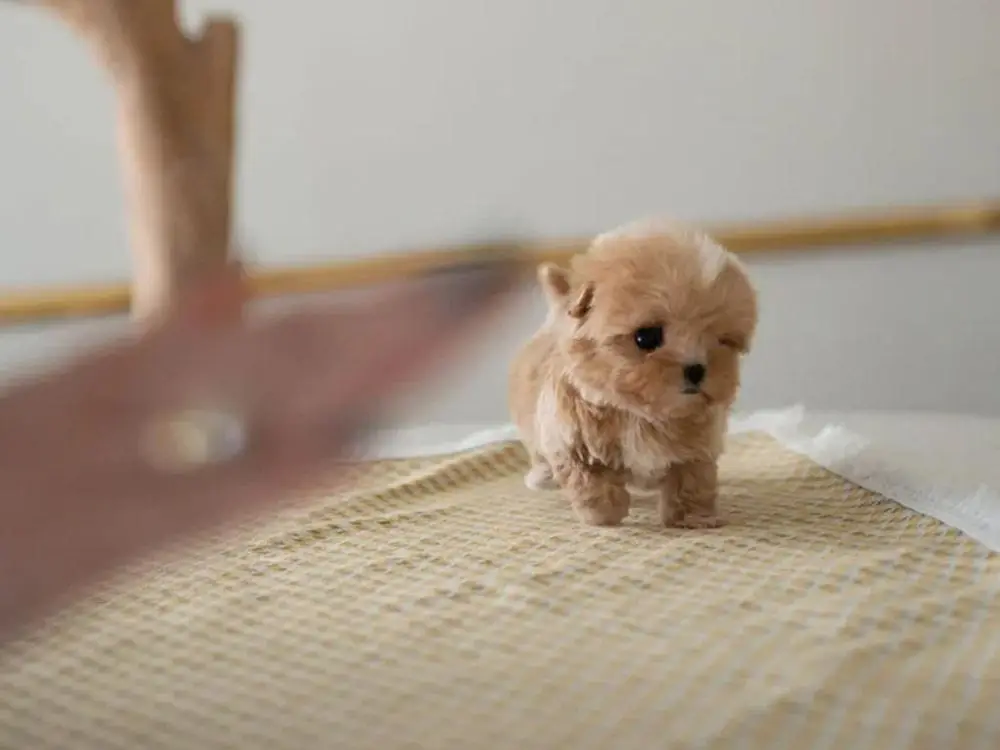
How big do teacup puppies get? Most finish between 2 and 5 pounds, depending on the breed and the parents. Some breeds sold as teacup, such as the Pomsky or French Bulldog, stay considerably larger.
When do teacup puppies stop growing? Usually at around 9 to 12 months for height, with a little filling out until about 18 months.
Is a teacup a different breed? No. A teacup Yorkie is a Yorkshire Terrier at the small end of the breed’s size range.
Can you tell me how big a specific puppy will be? Yes. Call us on (623) 396-4229 or send us a message and we will share the parents’ weights and our estimate.
Ready to meet a puppy whose size suits your home? Browse the puppies available right now, or read our other guides on choosing and caring for a small dog.