
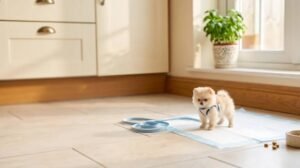
 Potty Train a Teacup Puppy: Puppy Pad Training & Potty Schedule
If you want to potty train a teacup puppy, you need a little more patience than with a bigger dog, but it is completely achievable. Tiny puppies have tiny bladders, so they need to go more often and can’t hold it for long. The good news is that small dogs respond beautifully to routine and praise. This teacup puppy potty training guide walks you through a simple, proven method, with puppy pad training tips and a daily puppy potty schedule you can start on day one. Remember, the key is to Potty Train a Teacup Puppy: Puppy Pad Training & Potty Schedule effectively!
Why teacup puppy potty training takes a little longer
Effective Strategies to Potty Train a Teacup Puppy: Puppy Pad Training & Potty Schedule
This guide will help you understand how to Potty Train a Teacup Puppy: Puppy Pad Training & Potty Schedule with ease.
A teacup puppy’s bladder is very small, so it fills quickly. Young puppies also don’t feel the urge until the last moment. That means accidents usually aren’t stubbornness. They simply happen faster than you can react. Most toy-breed puppies are reliably house trained somewhere between four and six months of age, and some take a little longer. If you are learning how to house train a small puppy for the first time, the key is consistency.
Choose your method: puppy pad training, litter box or outdoors
Decide on one method before your puppy comes home and stick with it, because switching back and forth confuses a young dog.
Puppy pad training: great for apartments, cold climates and busy days. Keep the pad in the same spot every time.
Dog litter box: works like a pad but is tidier and easier to clean. Many teacup owners love it.
Outdoors: the long-term goal for many families. Pick one spot in the yard and always take your puppy there.
You can start with puppy pad training and move to outdoor training later. Just make the change gradually by moving the pad closer to the door over a week or two.
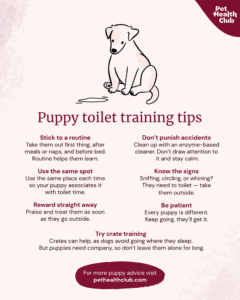
How to potty train a teacup puppy: step by step
1. Set a puppy potty schedule
Take your puppy to the toilet spot first thing in the morning, within 10 to 15 minutes after every meal, right after every nap, after every play session, last thing at night, and every 1 to 2 hours while your puppy is awake. A consistent puppy potty schedule prevents most accidents before they happen. It is the single most important part of learning how to potty train a teacup puppy.
2. Use a cue word
Each time your puppy goes in the right place, say a calm cue such as “go potty.” Over a few weeks your puppy will connect the word with the action, which is very handy later on.
3. Praise and reward immediately
The moment your puppy finishes, give warm praise and a tiny treat. Timing matters: reward within a couple of seconds so your puppy knows exactly what earned it. Keep treats very small, because teacup puppies have tiny stomachs.
4. Watch for the signs
Puppies usually show you when they need to go. Look for sniffing the floor, circling, whining, or suddenly walking away from play. When you see these, pick your puppy up gently and take it straight to the toilet spot or puppy pad.
5. Use a crate or playpen when you can’t watch
Dogs naturally avoid soiling where they sleep. A small crate or a playpen with a bed at one end and a pad at the other keeps your puppy safe and helps build bladder control. This is one of the easiest ways to house train a small puppy. Never leave a young puppy in a crate for long stretches, because their bladders can’t wait.
What to do about accidents
Accidents are a normal part of teacup puppy potty training. When one happens, don’t punish or scold, because it teaches your puppy to hide from you, not to go in the right place. If you catch it happening, calmly say “oops,” pick your puppy up and take it to the toilet spot. Clean with an enzyme cleaner, since ordinary cleaners leave a scent your puppy can still smell. And if accidents increase, go back a step: your puppy probably needs more frequent toilet breaks for a while.
Night-time potty training
Young teacup puppies usually can’t last the whole night at first. Expect one or two night-time trips in the early weeks. Keep these trips quiet and boring: no play and no lights if possible, then straight back to bed. As your puppy grows, the gaps will get longer.
Common mistakes when you house train a small puppy
Giving too much freedom too soon. Let your puppy earn access to more rooms gradually.
Switching between puppy pad training and outdoors without a plan.
Leaving food out all day. Scheduled meals mean predictable toilet times.
Expecting perfection in the first few weeks. Progress, not perfection, is the goal.

A sample daily puppy potty schedule
7:00 am: wake up, straight to the toilet spot
7:15 am: breakfast, then toilet 10 to 15 minutes later
8:00 am: play, then toilet
8:30 am: nap
10:00 am: wake, toilet, short play
12:00 pm: lunch, then toilet
Afternoon: toilet every 1 to 2 hours and after each nap
5:00 pm: dinner, then toilet
9:00 pm: last toilet break before bed
Night: one quiet toilet trip if your puppy wakes
Adjust this puppy potty schedule to your own day, but keep the times as regular as you can. Remember that teacup puppies need small, frequent meals to keep their blood sugar steady, so never cut back on food or water to reduce accidents.
Patience pays off
Every puppy learns at its own pace. With a steady routine, plenty of praise and calm clean-ups, you will potty train your teacup puppy successfully, and you will have a happy, confident little companion for years to come.
Getting ready for a new puppy? Read our New Teacup Puppy Checklist at https://teacuppuppiesparadise.us/new-teacup-puppy-checklist/ or find the right breed in our Best Teacup Dog Breeds guide at https://teacuppuppiesparadise.us/best-teacup-dog-breeds/. When you’re ready to meet your new best friend, see our available puppies at https://teacuppuppiesparadise.us/buy-teacup-puppies-online/. For general puppy care advice, the ASPCA dog care guide at https://www.aspca.org/pet-care/dog-care/general-dog-care is also a helpful resource.